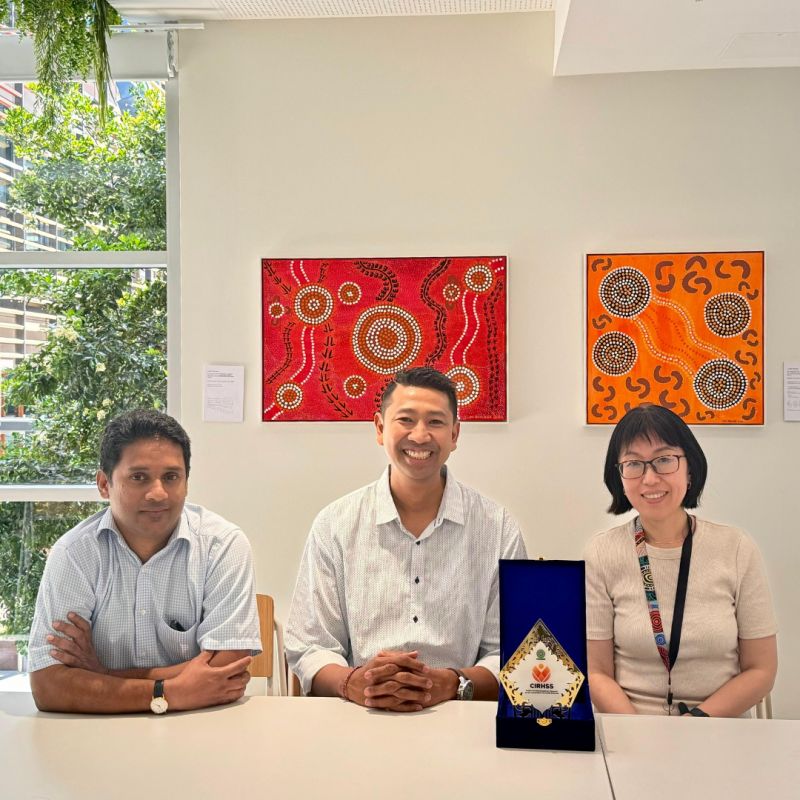
Women living in remote villages in Bali are now receiving high-quality mental health care via a tech platform developed by Associate Professor Na Liu from the University of Sydney Business School.
Despite Bali having Indonesia's highest rate of schizophrenia, the women impacted lack both digital devices and internet access. To address this, Dr Liu and the research team, including Professor Manoj Thomas, the project's participatory investigator, are developing a practical, low-cost offline-first mobile app to improve mental healthcare coordination in rural communities.
Designed for low digital and clinical literacy, the app runs on shared community devices and fits everyday local workflows. Co-designed with frontline workers and tested in clinics and NGOs, it supports smoother information sharing, faster referrals, and more equitable access to care.
"Lack of digital access should not be a barrier to receiving lifesaving mental health care," shares Dr Liu. "Our project uses the 'task sharing' model promoted by WHO, where local volunteers and caregivers are empowered to do more to reduce the workload of doctors who are a scarce resource. This technology empowers the volunteer to be able to do more, the information travels back to the doctors, and the patient receives high-quality medical advice in situ and quickly."
Dr Liu's vision is to offer an inexpensive, low-tech solution that is scalable for remote or underserved areas worldwide. The project is funded by KONEKSI – Australia-Indonesia Knowledge Partnership Platform and is a collaboration with University of Sydney computer science alumnus, Associate Professor Cokorda Pramartha, Ph.D, who is now based at the University of Udayana.
#LeadershipForGood